Quantcast "Where Panentheism, Revisionism, and Anarchocapitalism Coalesce"

AnthonyFlood.com

Where Panentheism, Revisionism, and Anarchocapitalism Coalesce  

Launched January 17, 2004 / Best viewed through Internet Explorer

anarchristian blog

Hard Bop blog


Essays by Me

Essays by Others

Gallery of Heroes

Contact Me 


An Outlook in Outline

My Philosophical Workshop

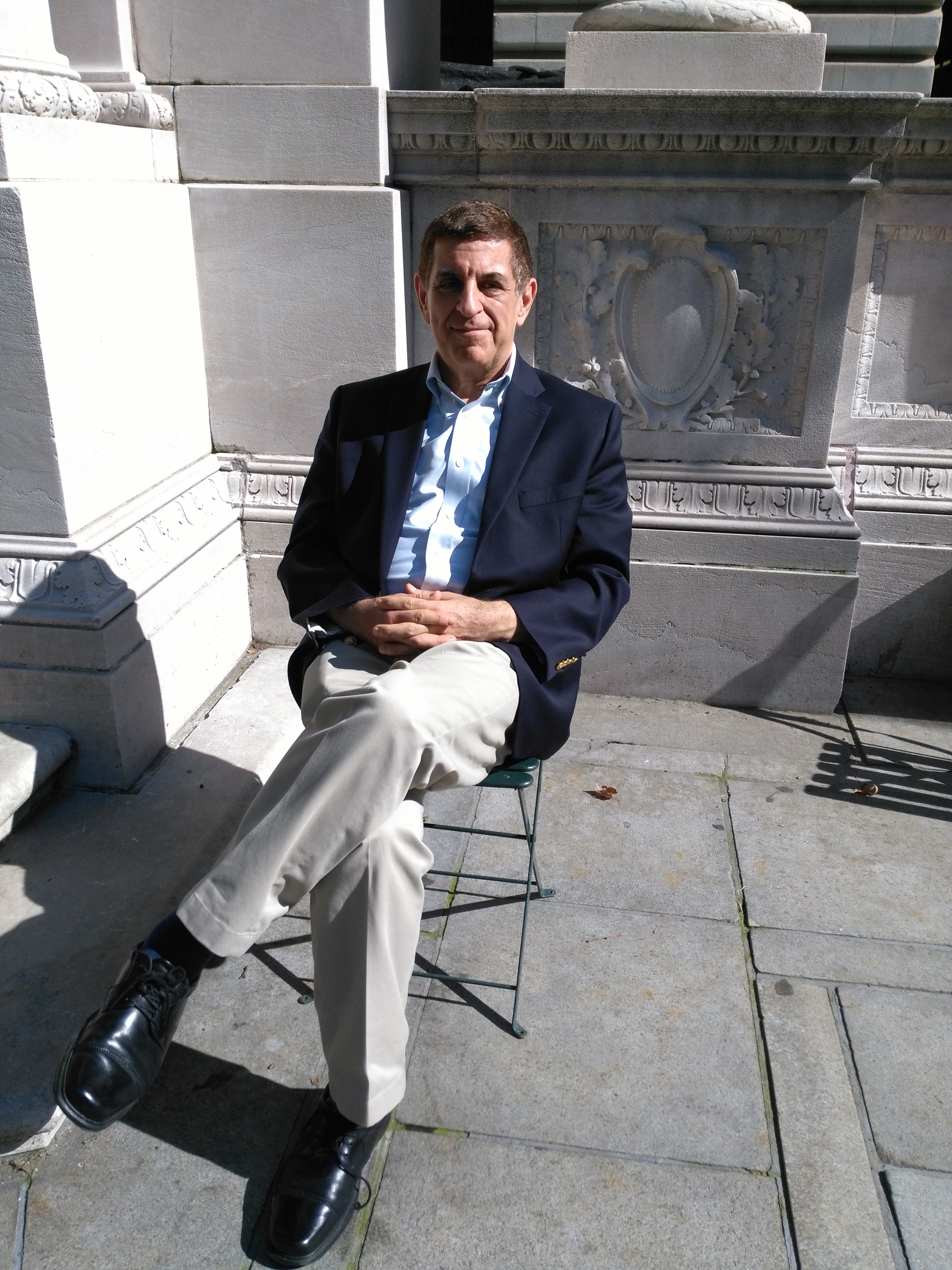
Snapshot of a Philosopher

Elements of a Credo

Neither Left Nor Right

Recent Essays:

Is Anarchy a Cause of War? Some Questions for David Ray Griffin[Off-Site]


A Major Addition to the Gallery of Heroes

From Whose Togas I Dangle

W. Norris Clarke, S.J.

June 1, 1915-June 10, 2008

The writings of the late Father W. Norris Clarke, an appreciative and engaging critic of Whitehead and Hartshorne, has forced me to rethink my understanding of St. Thomas.  I spoke with him briefly by phone in the early '90s when I was working my way through David Braine's The Reality of Time and the Existence of God, which Clarke had just reviewed for The International Philo-sophical Quarterly.  Remembering many years later the cheer-fulness and energy with which he took that call from a stranger, I regret I did not keep in touch.  Fortunately, all of his major papers have been anthologized.  In addition to several that have meant a great deal to me, I will hunt down and format for posting nonanthologized articles and reviews.  What I have done so far is listed below.

Anthony Flood

May 22, 2010


 Earthquakes and Theodicy: Five Years Later

No need to update what I wrote to The Spectator [UK] on January 15, 2005 (appended below, posted here soon thereafter): just substitute the Haitian earthquake of January 12, 2010 for the Boxing Day tsunami of 2004.   The televised spectacle of intelligent and morally sensitive religious persons offering the lamest of rationales for why their God, who (as they and their flocks insist) could have held the North American and Caribbean tectonic plates in place, permitted them to shift has moved me to highlight my half-decade-old letter. 

I have come to accept that the all-knowing and all-loving lure of the cosmos lacks any coercive physical power.  For me, asking why God couldn't prevent an earthquake is almost like asking why you couldn't.  (Almost, because you at least have some coercive physical power [albeit insufficient for preventing tectonic shift], but God has none [not even enough to lift a pebble].)  If mainstream theists cannot imagine worshiping such a deity, that says more about them than it does about what it takes for something to be God. 

Visitors are invited to essay non-cop-out answers and send them to me for my possible edification.

Anthony Flood

anarchristian@juno.com

February 1, 2010


The Moral Idiocy of Paul Johnson’s Theodicy

Anthony Flood

To assert, as Paul Johnson does, that “the giant waves were acts of a benevolent God” [The Spectator, January 15, 2005] is to use language provocatively, but not wisely.  We can get all we want of such talk from the local pub.  To answer his question, “What had the deaths of 150,000 Lisboans [and more than that number of South Asians in 2004] to do with a fundamental question like the existence of God?”: it has to do with the moral character of the being whose existence is affirmed, if not also that of the affirmer.  Both the recent and more remote catas-trophes represent massive instances of excessive, non-disciplin-ary evil [ENE], evil (a) that no good consequent to it could justify, and (b) so intense that to entertain it in terms of its possible consequent good is itself morally objectionable. 

In the case of God, at least as small “o” orthodox Christianity classically conceives him, the power to prevent ENE is infinite and the risk is zero.  Refraint under those circumstances is unin-telligible given the moral character that is also attributed to God, i.e., boundless loving-kindness.  That is, boundless lovingkind-ness combined with the power to bring about any noncontradic-tory state of affairs under any circumstances (or none, i.e., ex nihilo) creates a surd so long as there is any evil in the world, but especially so long as there is any ENE.  Surds are not intellectually difficult; they are intolerable and to be removed from one’s worldview forthwith.

The “Darwinian Central Committee” that Mr. Johnson holds up to ridicule at least recognizes the problem to which he is embarrassingly insensitive.  When, however, he refers to the magnitude of the tsunami’s human toll as “only the tiniest ephemeral blip on the worlds demographic radar,” he could not drive people into the atheistic camp more effectively than if had intended to do so.   Each human component of that “blip” had a life that, regardless of what Johnson thought of it, he must have thought worth living.  Each of those lives is now lost, and that loss has caused incalculable grief, multiplied by 150,000.  And anyone who could have prevented it or any other instance of ENE, but didn’t, is morally challenged.  But God is morally perfect.  How is that for a problem, Mr. Johnson?

The noble souls who are doing what they can to help the tsunami’s victims are acting according to their sense of moral responsibility: all things being equal, morally responsible people prevent or remedy ENE when they can.  The extent of their aid will vary with means, other obligations, and the risk to life, health, or property to which risk their prospective help might expose those goods.  For example, a person of normal moral sensibilities spontaneously acts to move a child out of the way of a careening car if he cannot stop the car.  He does not sit on his duff, drink in hand, as the tragedy unfolds, muttering, “Well, the driver, the kid, and the kid’s guardian all had free will.  That’ll teach arrogant and boastful people how fragile life is.”  No, they condemn him under those circumstances, and if given the opportunity, some would be inspired to beat the bearer of that attitude within an inch of his life.

Inability, however, is normally not blameworthy: no one is responsible for failing to do what he cannot do.  So if the God of, for example, Whiteheadian process theology exists, then the microagents (“occasions of experience” was Whitehead’s term) that comprise the cosmos are all open to divine persuasion, but not determined to become as God wills.  That philosophical theology provides that (a) there is morally perfect, world-transcending being who is eminently and constantly related to all other agents that comprise the world, (b) all of them are jointly responsible for the world’s having the contingent actual-ity that it does, but (c) it is not necessary to conceive God’s supreme power as the ability to push gross matter around, e.g., hold tectonic plates steady. God cannot mechanically interact with gross physical objects like those plates, and is therefore not responsible for failing to hold them still, or do any of the countless other things that would result in no evil, or at least no ENE.

Although ENE exists, the choice between (a) affirming the existence of a God of boundless compassion combined with the power to bring about any noncontradictory state of affairs (under any or no circumstances) and (b) denying God's existence is a false alternative. There is a third option: modify one's concept of God.

Modified October 1, 2006


My “Dialog” with Roger Ebert on Death

The following is my response to “Go Gently into That Good Night,” renowned film critic Roger Ebert’s eloquent expression of agnosticism in the face of his probable death from cancer.  In his brief response, he graciously overlooked my lapse from mindful-ness of the personal context of his thoughts.  I tried to make amends in my follow-up.  All this may be viewed on his blog.  I encourage my visitors to become his as well.


May 6, 2009

If everything is burnt up in the inevitable collapse of the universe, what, in the end, are we contributing to?  What does our “kindness” matter?  As Bertrand Russell famously wrote in 1903:

“That man is the product of causes that had no prevision of the end they were achieving; that his origin, his growth, his hopes and fears, his loves and his beliefs, are but the outcome of accidental collocations of atoms; that no fire, no heroism, no intensity of thought and feeling, can preserve individual life beyond the grave; that all the labors of the ages, all the devotion, all the inspiration, all the noonday brightness of human genius, are destined to extinction in the vast death of the solar system, and that the whole temple of Man’s achievement must inevitably be buried beneath the debris of a universe in ruins—all these things, if not quite beyond dispute, are yet so nearly certain that no philosophy which rejects them can hope to stand.  Only within the scaffolding of these truths, only on the firm foundation of unyielding despair, can the soul’s habitation henceforth be safely built.”

Henceforth?  Safely?  The impregnability of Russell’s (and your?) position is superficial, momentarily tenable only if one ignores the stake of contradiction driven through its heart (and the untenability of the empiricism that cannot make sense of the science it depends on).  Russell may have written your credo, but how can it not drive you either to madness or despair? There may be, as you believe, nothing for us on the “other” side of our deaths.  Unless, however, there is an everlasting divine life to which we contribute, a repository of experience that cherishes every worthwhile experience, then in the end nothing means anything, because a universe in ruins that began as “accidental collocations of atoms”—albeit ruins in a future distant enough for us to evade—stamps an expiration date on all value.

To consider the case for such a theistic ethical “contributionism” would, of course, require you to grapple with the arguments of a philosopher like Charles Hartshorne.  It’s much easier to take the agnostic way out and suggest that that’s the best human beings can do.

On May 25, 2009, Mr. Ebert wrote:

A wonderful quotation.  I believe Russell is correct, and he has not driven me to madness and despair.  To the contrary, he helps me to understand.

Shortly after which I wrote :

Mr. Ebert, thanks for commenting on my post of May 6. What I should have done there and belatedly do now is salute the courage and honesty with which you are facing more immediately what we all face eventually. Apparent oblivious-ness to personal circumstance marred my expression of disagreement with your agnosticism.  You seemed prepared for what Socrates said it was the office of philosophy to prepare one for [Phaedo 67e].  I find the spirit of your reflections Socratic, not Stoic, and therefore encouraging of dialog.  I’m gambling, therefore, that you will receive this follow-up Socratically.

I appreciate your appreciation of Bertrand Russell’s eloquent confession of faith, but don’t understand your “understanding.”  In seconding his thoughts, you are following the logician’s equivalent of a chess grandmaster.  A grandmaster can blunder, however, inadvertently inviting checkmate.  I claimed that his description of the universe’s ultimate heat death as a firm foundation for human living [“only on the firm foundation of unyielding despair can the soul’s habitation henceforth be safely built”] plunges a “stake of contradiction” through the heart of his worldview (and yours) and shatters the facade of its serenity.

I can see that it has not driven you either to madness or despair, neither of which, of course, I wish on you.  As your interlocutor, however, I asked how you avoid either, logically how.  Russell’s eschatology is but a protracted version of Sisyphus’s boulder-rolling exercise, whose existentialist point Camus sharpened to perfection.

I therefore surmise that a “blessed inconsistency,” a logical lapse, an intermittent forgetfulness of what one believes about this when one turns one’s attention to that, spares you the aforementioned mental afflictions.  It cannot, however, spare your position the fate of basic incoherence, to which the only alternative is silence, a dilemma to which a man of letters like yourself cannot integrally be indifferent.

On a positive note, I suggested that an escape from the dilemma might lie in a worldview that made sense both of one’s virtually ineradicable ethical contributionism and one’s rationality.  The latter human traits and Russell’s worldview are like matter and antimatter.

With respect,

Tony Flood

The "dialog" ended there.—A.F.


About This Website

This non-commercial site is a re-pository of examples of the scholar-ship that has indebted me and of essays of mine that try to pay that debt forward. 

My chief intellectual creditors occupy my Gallery of Heroes.  I hope you will visit the pages I've devoted to them.

Links to my blogs are in the left column of this page.

Your questions, comments, and criticism are welcome.

Anthony Flood


Conversation

“Conversation is a game with some hard rules: say only what you mean; say it as accurately as you can; listen to and respect what the other says, however different or other; be willing to correct or defend your opi-nions if challenged by the conversa-tion partner; be willing to argue if necessary, to confront if demanded, to endure necessary conflict, to change your mind if the evidence suggests it.”

David Tracy, Plurality and Ambiguity.


The Desire to Be Deceived

“A prime cause of our being de-ceived is . . . always our own desire to be so deceived. . . . (A)ll of us constantly need to be asking our-selves what it is which we want to be true, and whether our desires so to believe are stronger than our de-sires to know the truth, however uncongenial to us that truth may be.  It is truly an existential chal-lenge.

Antony Flew, How to Think Straight: An Introduction to Critical Reason-ing.  (Thanks to Dave Lull for the ci-tation I carelessly lost!)


Finally, a site dedicated exclusively to the life and writings of

MurrayRothbard.com

Hosted from "down under"

by Chris Brown